Eepie Mouse’s Story
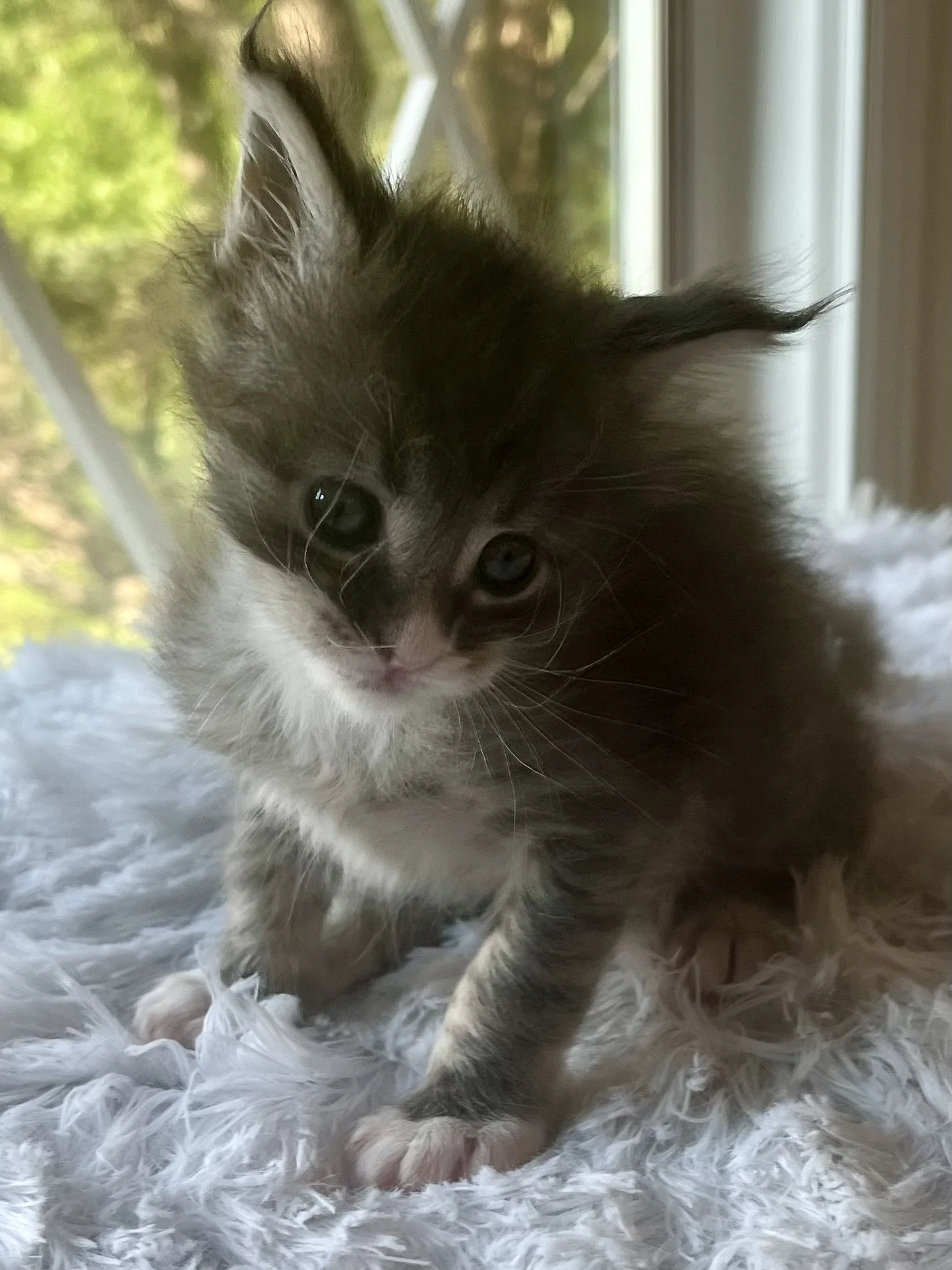
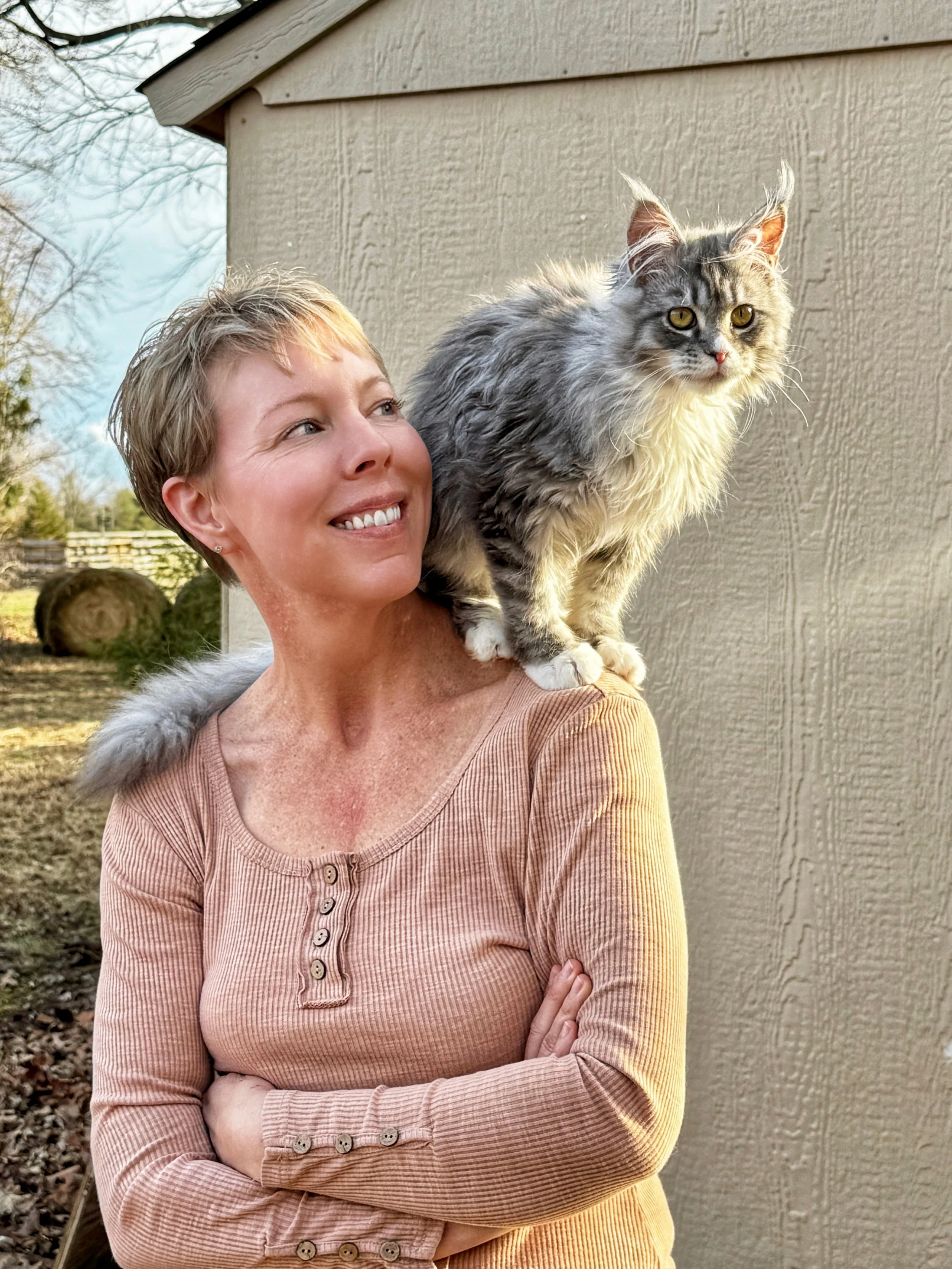
Eepie Mouse is a beautiful Maine Coon cat. He is a blue tabby with big white mitten paws, large soulful amber eyes, a long fluffy tail as wide as his body, and a little pink nose. Eepie spends his days playing with his four-legged friends (of both the feline and canine varieties), getting treats, lounging in the sun, and snuggling with his humans. Everyone who meets Eepie Mouse falls in love with his sweet demeanor and he falls in love right back- he rubs his soft head against his new friend’s hand and purrs up at them while he gazes into their eyes. Eepie is a very happy little cat.
Eepie was born on June 4, 2025 into a litter of five kittens. All five of the kittens were born with serious deformities and medical complications. Despite intensive care, sleepless nights, and extensive veterinary support, Eepie would be the only survivor.
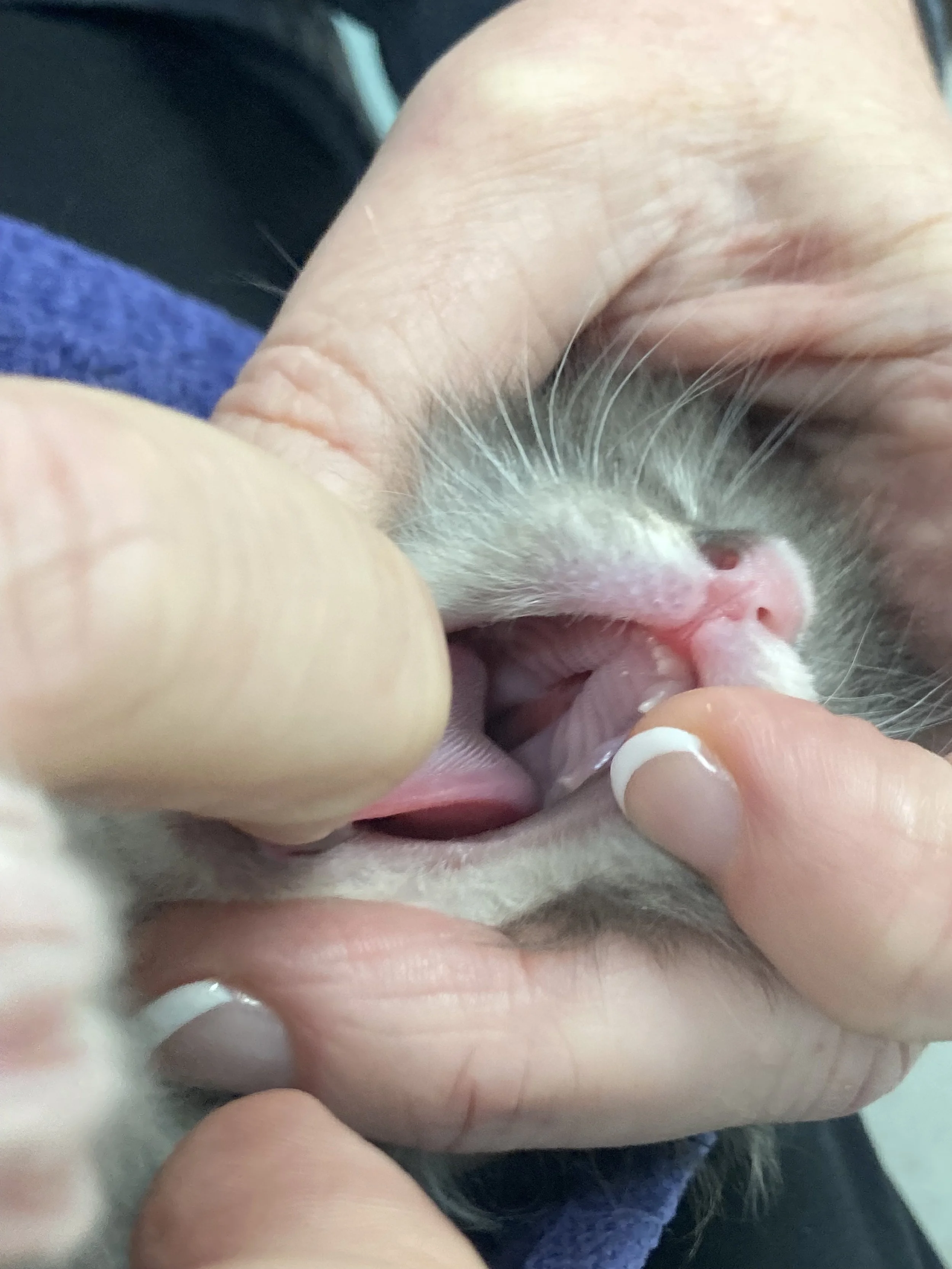
12 hours after Eepie was born, I knew there was a problem- he was losing weight. Maine Coon kittens should gain about 10 grams every 24 hours. I am meticulous about weighing my kittens because weight loss is often the first indicator that something is wrong. I put Eepie back with his mother and watched. He appeared to be nursing, but when I looked more closely, I could see that he wasn’t latched. I looked in his mouth, and my heart sank- he had a cleft palate.
A cleft palate means that there is a hole in the roof of the mouth. Eepie had a full cleft of both his soft and hard palate. Kittens with cleft palates can’t nurse from their mothers because they can’t form the suction with their mouths. Even if they could nurse, the milk would go into the nasal cavity and into the kitten’s lungs causing the kitten to aspirate. Aspiration almost always leads to pneumonia and kittens with aspiration pneumonia have a very low chance of survival.
I knew the only chance this kitten had to survive was for me to tube feed him. I had the supplies to tube feed- the formula, feeding tubes sized for neonatal kittens, and syringes. I had watched videos of how to tube feed kittens, and I had spent an hour on the phone with a breeder who explained the entire process to me. Academically, I knew what to do. Practically, I had no experience. I knew that I had to tube feed this kitten, and I also knew that if I made a mistake he would die in my hands.
I will never forget the almost paralyzing fear I tried to ignore as I methodically went through the steps. I measured the tube from the outside of Eepie’s mouth to his ribs and marked it with a sharpie. I mixed up the formula and set it on a warming plate. I referenced a feeding chart to find out what the stomach capacity was of a kitten who weighed 110 grams. I checked the temperature of the formula on my wrist, filled the syringe, attached the syringe to the tube, wrapped Eepie in a towel, and fed the tube down the left side of his throat. When I thought the tube was in position, I waited for Eepie to make noise so I could be sure the tube was in his stomach and not in his lungs. Nothing. Then a little eep followed by a louder eep and then he was screaming “eep! eep! eep!”. I held the syringe in one hand and slowly pushed the formula through the tube and into Eepie’s stomach. Relief- the first feeding was done.
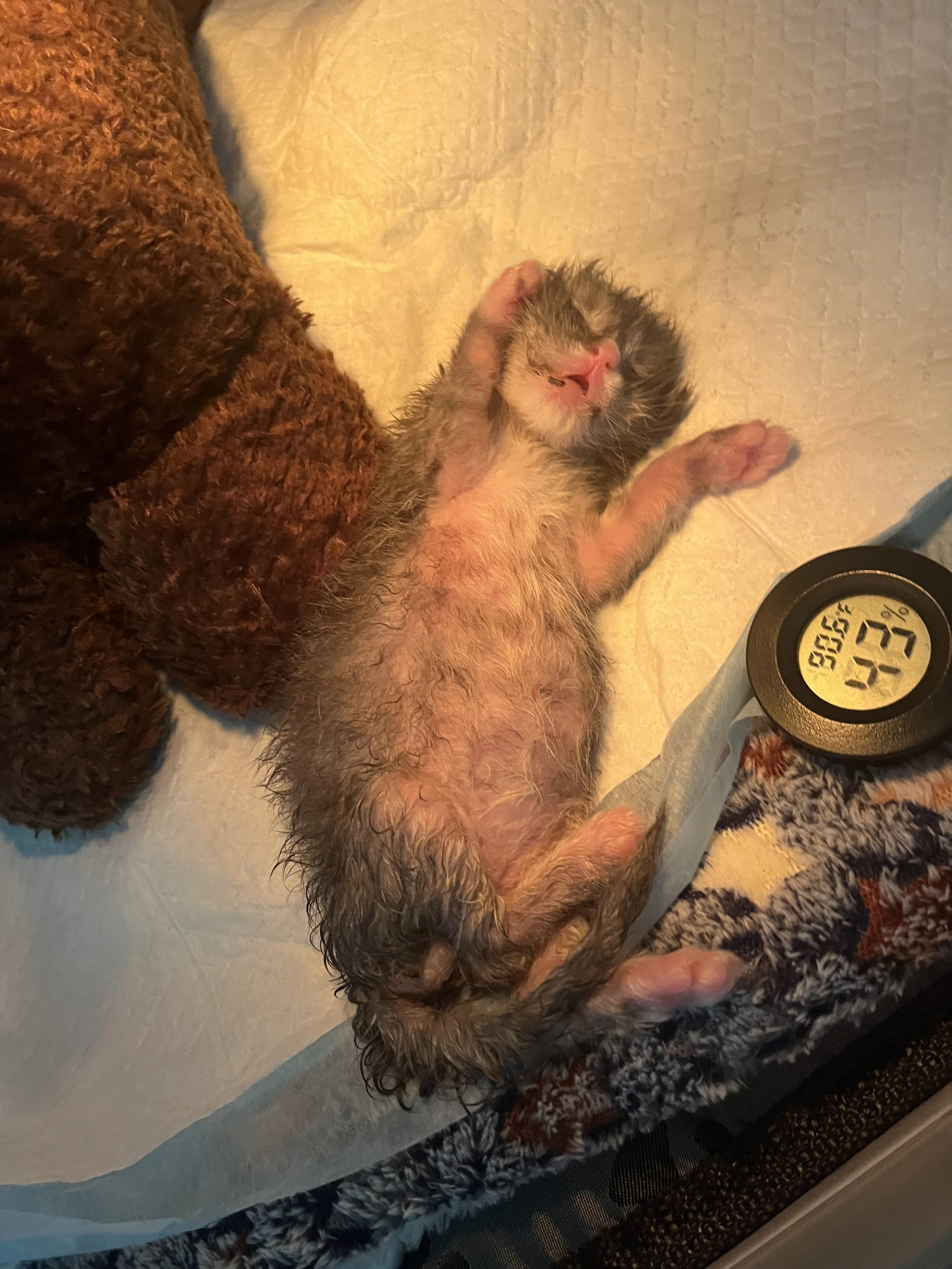
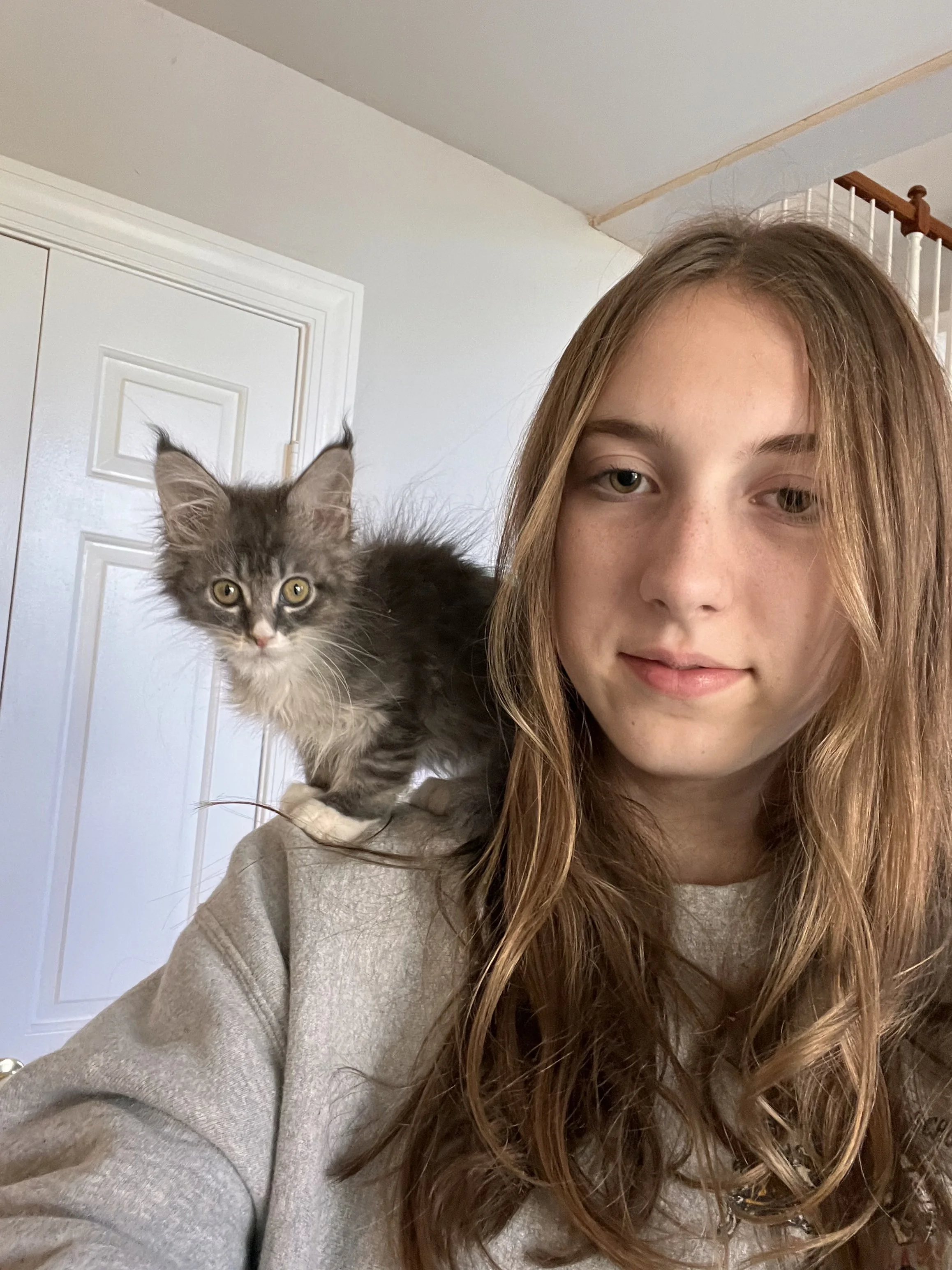
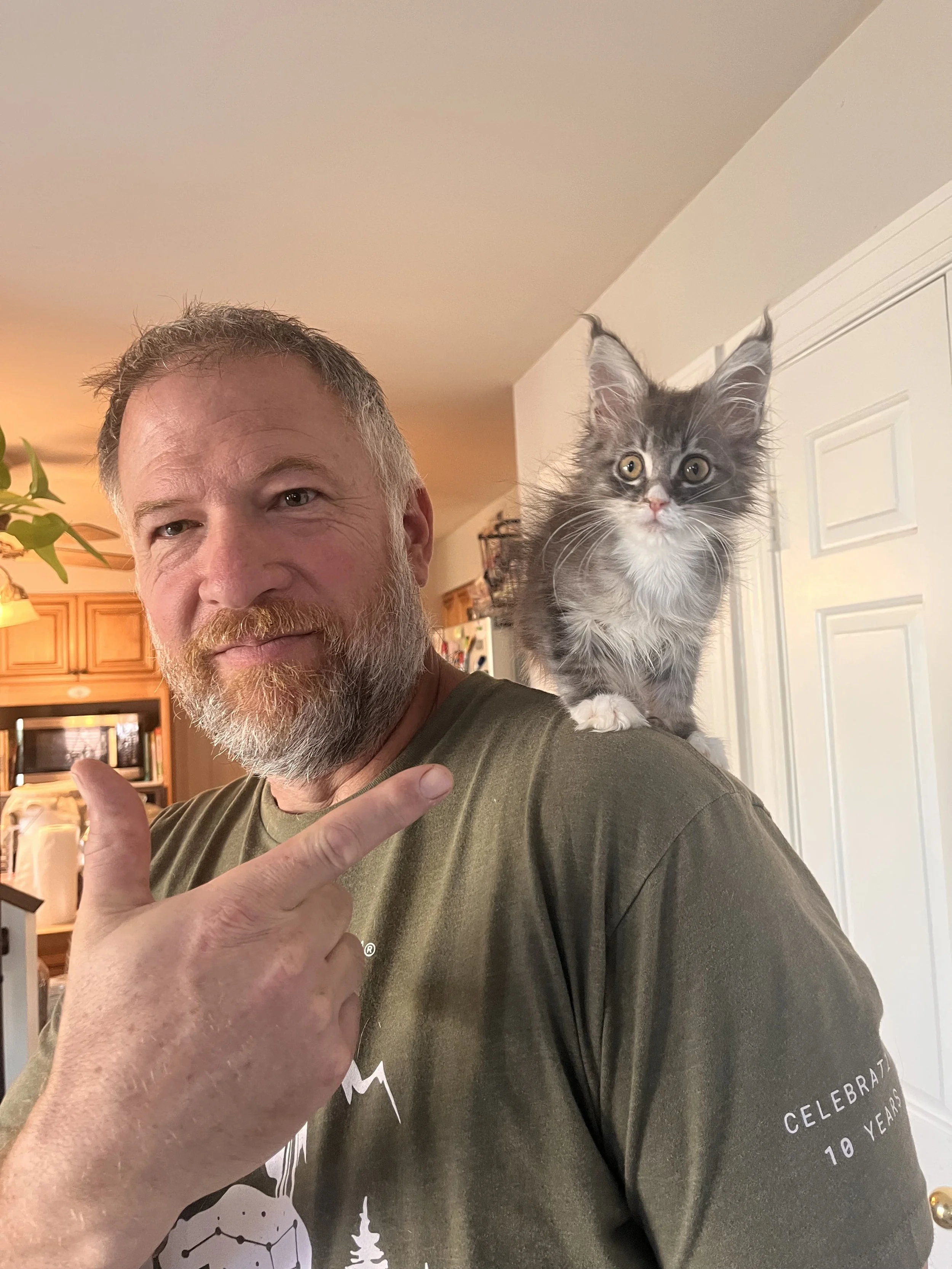
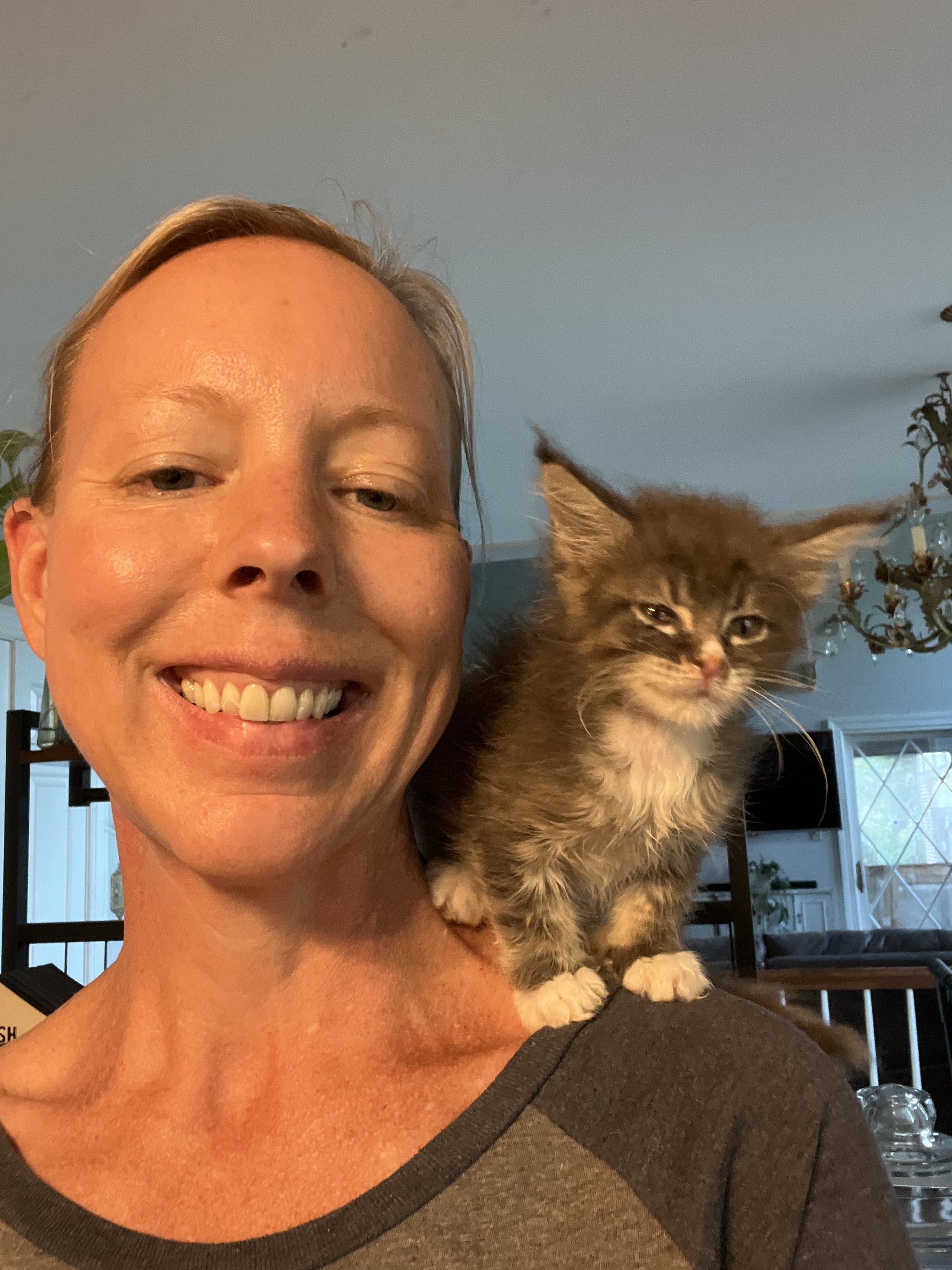
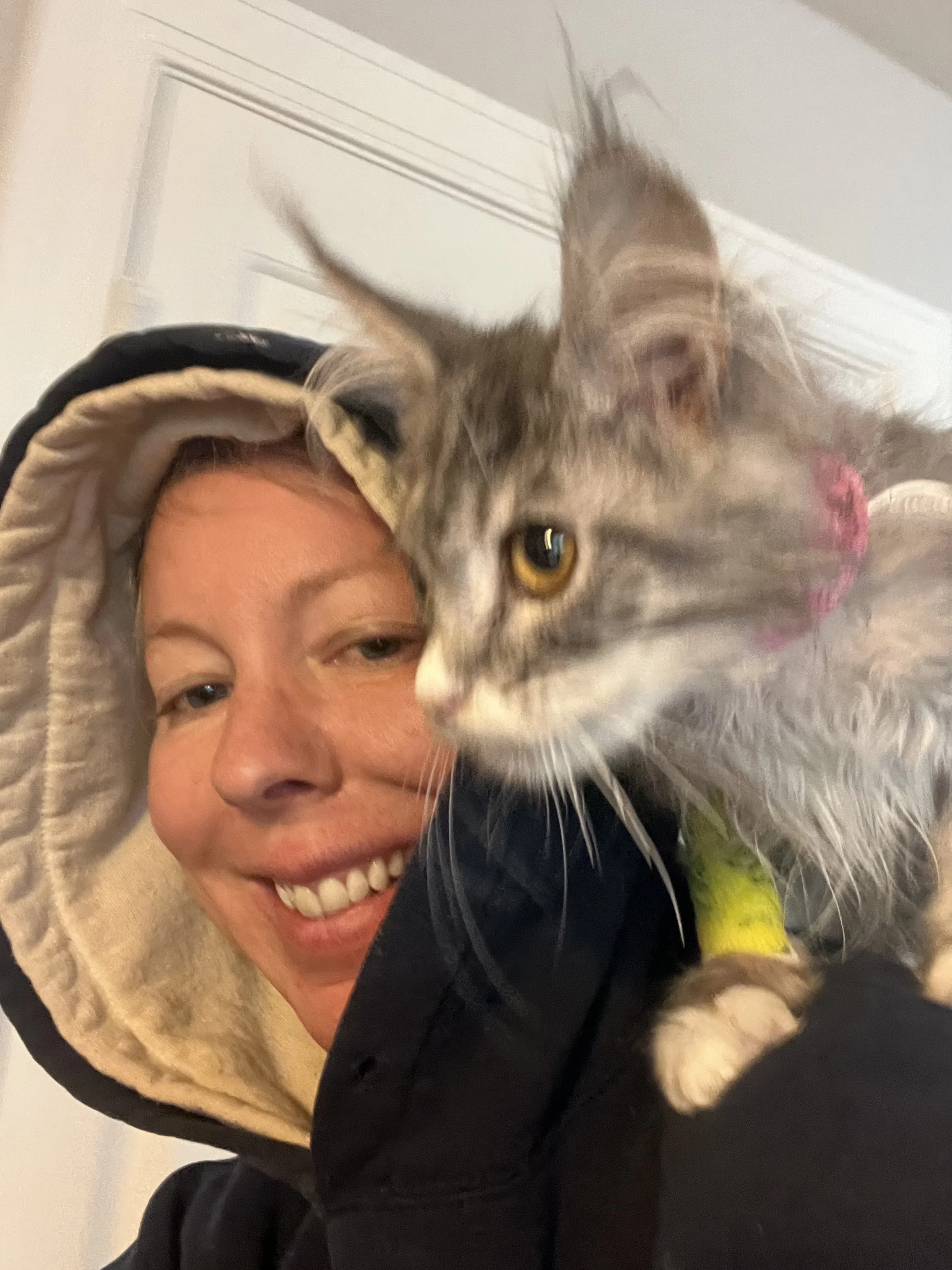
My husband, Neil, and I tube fed our little kitten, named for the little eeps he made before each feeding, every three hours around the clock until he reached his first milestone-312 grams. Then we tube fed him every four hours. We put him with his mom between feedings until the day we found raw spots on his neck and belly. She was cleaning him so aggressively that she was licking off his skin. We separated Eepie from his mom and put him in an incubator between feedings with “Mama Moose”. Mama Moose is a stuffie with a heart beat. Eepie Mouse would snuggle up next to Mama Moose and fall asleep. We took over grooming Eepie. After feeding him and stimulating him to go to the bathroom, I would use a toothbrush to brush his fur. Once I was finished, Eepie would scramble up my chest and perch on my shoulder.
Despite being cautious, Eepie Mouse developed aspiration pneumonia- not once, but multiple times- I lost count of how many times he fought pneumonia. We used a nebulizer with saline every three hours, had an oxygenator running into his incubator constantly, and gave Unasyn injections every six hours. Eepie survived.
When a kitten is fed formula, constipation is a real problem. Eepie would get constipated for days at a time which is absolutely terrifying. I learned how to give enemas- much to my veterinarian’s horror. I don’t blame her at all for being horrified- giving a kitten an enema is very dangerous. At the same time, bringing a kitten to a vet’s office who is immune compromised because he never got colostrum or his mother’s milk, and depending on the day, may or may not be fighting pneumonia, is also very dangerous. It is also very dangerous to let the constipation continue. Sometimes there are no good solutions.
My veterinarian recommended an excellent oral surgeon who could possibly repair Eepie’s cleft palate. I called to book an appointment, and my heart sank when I found out he had to be four months old before we could bring him in for a consultation. I booked the consultation appointment and wondered if Eepie would live long enough to make it to October.
When Eepie was six weeks old he bit through his feeding tube. I pulled the tube out after his feeding, and it was only a stub. I stared at it in shock. I opened his mouth with my fingers and saw a bit of the tube peeking up from his throat. Neil held him while I raced upstairs and grabbed a pair of tweezers. I ran back to Eepie, pried his mouth open and went down his throat with the tweezers. I caught the tube with the tweezers, pulled it out of his throat, and started sobbing. I was exhausted and terrified and we had to figure out a new way to feed this kitten for at least the next 10 weeks.
Neil made bite guards out of pencil grippers, dental spit tubes (I don’t know what they’re called but we still have 99 out of the 100 we bought because they didn’t work), plastic straws…nothing worked. I called my vet and asked if they would put an esophageal tube in Eepie’s neck and was told they were too risky. I did internet searches on how to feed kittens with cleft palates, and I talked to other breeders, and I talked to veterinarians and what I found out was that there is almost no information out there about feeding cleft palate kittens. The vast majority of kittens born with cleft palates are euthanized shortly after birth.
On a whim, I started searching how to feed puppies with cleft palates. It turns out that there is some information out there about feeding cleft palate puppies because euthanasia isn’t the default course of action for puppies born with cleft palates. Some people were soaking kibble in water and feeding puppies the mush, some people were soaking kibble and rolling the mush into balls and then baking it so that it was kind of crumbly before feeding it to the puppies. I didn’t think either of those options would work for Eepie Mouse. Finally, I found a video of someone mixing puppy food with gelatin for their cleft palate puppy. I knew that was the answer.
I went to work making up a recipe for Eepie Bites. An hour later, Neil cut up the brown gel into cubes, and we put Eepie Mouse up on the kitchen counter in front of a plate. He was almost 7 weeks old, and he had never tasted food. He sniffed and then he gobbled. Sometimes he would sneeze and snort, but he learned pretty quickly to only eat the bigger chunks- they were less likely to go up his nose. Eepie could eat! He spent the next two and a half months being sustained by Eepie Bites. He almost always was congested and sneezy from food getting into his cleft, but his lungs were clear and he was gaining weight!
Finally the day came for Eepie to have his consultation with the surgeon. She said she could do the surgery, but it was possible that it would fail. She explained that sometimes the surgery had to be repeated three times to fully heal the cleft. She also told us that Eepie Mouse was too little. Eepie had to wait two more months- he was scheduled to have surgery in January and the goal was to try to get him up to 5 pounds.
January finally arrived and Eepie Mouse weighed 4 ½ pounds. Even though he didn’t quite make it to his goal, Eepie was able to get surgery. Everything seemed to go well, and Eepie was able to start eating regular kitten food and drinking water- he had never tasted water and he absolutely loved it.
As the week went on, Eepie seemed to feel worse. His topical pain medication had worn off, and he wasn’t eating well. He was also grinding his teeth together. I took a video of him grinding his teeth and sent it to his surgeon. She had me bring Eepie in first thing the next morning for an exam. Bad news: the repair on Eepie’s hard palate had failed. Worse news: he had pneumonia again. Eepie’s Dr. sedated him to put in an esophageal tube. While he was sedated, she tried to find the source of his teeth grinding, but nothing was obvious. She removed his remaining baby teeth in case that had something to do with it. She also took x-rays to make sure the tube was placed correctly. We were sent home with instructions on how to feed Eepie through the new tube in his neck.
That evening, Neil and I sat down to feed Eepie and when we uncapped his tube, I heard a hissing noise. His surgeon had said to send a message with any issues so I panic-texted her a video. She said to stop feeding him and she consulted a radiologist friend of hers. She sent the x-rays of Eepie’s chest and asked him to confirm the tube was in the right spot. The next morning, we got good news- the tube was in the right spot. We also got very bad news- the radiologist noticed fluid around Eepie’s lungs in the x-rays. Eepie’s surgeon said that fluid around the lungs could be associated with heart failure and Eepie needed an echocardiogram. It was Saturday. She called another friend and got us an appointment first thing on Monday morning with a cardiologist.
Early that afternoon, I heard a faint whistle when Eepie breathed. Knowing he had fluid around his lungs, I scooped him up and rushed him to the Emergency Animal Hospital. The ER Dr. drained 32ml from the area around his lungs, did a snap proBNP test (this test can indicate heart failure), and ran a blood test. The snap proBNP test came back negative, but the ER Dr. sent us home with medication for heart failure just in case and told us to follow up with a cardiologist.
Monday morning, I took Eepie to the cardiologist for his echocardiogram terrified that he was in heart failure. The cardiologist said his heart was perfect which was a huge relief- until I realized that meant we didn’t have an answer for the fluid around his lungs. The cardiologist said it was possible that Eepie had a virus that was causing pleural effusion. I asked him what kind of virus would cause that. He said it could be FeLV, FIV, or FIP. My heart sank. None of that was good. I was pretty sure he didn’t have FeLV or FIV so that left FIP.
FIP used to be a death sentence, but there is medication now. I keep the medication for FIP on hand. I have never had a cat with FIP, but I knew if I ever did, I would need to start treatment immediately. I also knew that if a cat without FIP was treated with the FIP medication that it would not hurt the cat and that cats can develop FIP after a stressful event like surgery and that 6 months is a common age for cats to develop FIP.
Knowing all that, I took Eepie home and injected the FIP medication. It was awful. The needle was big, the medication was thick, and Eepie screamed. I loaded him up again and took him to my vet to rule out FeLV and FIV. On the way, I called the Emergency Hospital and asked them to send me Eepie’s blood work. While I was waiting in the lobby for Eepie to get tested, my vet walked in- I have been to this clinic about 100 times and have never seen my vet anywhere but in an exam room. She asked me how Eepie was doing and I gave her an update and told her about the FIP injection. She said the injections are terrible and told me that there’s a pill that works just as well, but that they didn’t carry it because it was too expensive to keep on hand. She told me about another clinic that might be able to help me.
As soon as I got him to the car, I called the other clinic and told the receptionist my kitten likely had FIP, and I needed to see a Dr. to get medication. She told me to bring him right away. On the way there, I got the call that Eepie had tested negative for FeLV and FIV- yay. Eepie and I saw the Dr., I showed her Eepie’s blood results, and we were immediately given capsules to treat his FIP which we could open up, mix with a Churu treat, and feed him through his e-tube. I was so relieved that I cried while I was thanking her.
That evening I came across a study that had been done in Iran on 629 cats with FIP. 11 of the 629 cats grinded their teeth together right before they were diagnosed with FIP despite having no obvious issues that would cause them to grind or gnash their teeth. I went to the FIP Warriors Facebook page and typed “teeth” into the search bar. I found multiple posts where people were concerned their cat had FIP because of weight loss and lack of appetite. Most people mentioned as an afterthought that their cat was also grinding his teeth. The comments on these posts were along the lines of “your cat doesn’t have FIP, he’s having a problem with his mouth and doesn’t want to eat- get your cat’s mouth checked by your vet”. I emailed the study to my vet, the vet who treated Eepie for FIP, and Eepie’s surgeon and told them what I had read. FIP presents itself in so many different ways that diagnosis can be difficult. There’s no definitive symptom that points to FIP. I hope to raise awareness that teeth grinding, or “bruxism” can be a symptom of FIP.
Three days after we started treatment, Eepie started to purr again. A couple days after that, his lungs sounded clear- his pneumonia was gone. Three weeks after that, Eepie underwent surgery again to repair his hard palate. We continued to feed him through his e-tube for several weeks until mouth healed from the surgery. Once he was healed, I took him to see his surgeon again and she confirmed that the second attempt was a success! Eepie’s cleft palate was fixed and he could live the life of a normal kitten!
Eepie finished the 84 day treatment for FIP and is now in the observation phase. He is doing amazingly well and shows no signs that he was ever different from any other cat except that he is about a third of the size of other Maine Coons his age and he still scrambles up the chest of whoever happens to be holding him to perch on their shoulder. Eepie Mouse is pure joy, and I am so grateful to everyone who had a part in saving his life.